


Quali sono i tipi di cateteri a palloncino?
-
 2022-10-25
-
LEPU


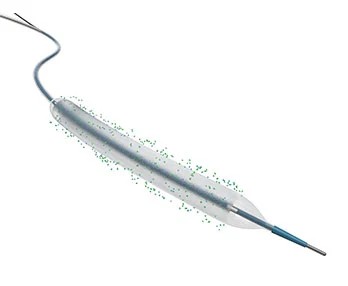
On January 16th, 1964, Dotter and Judkins performed the world's first lower limb vascular angioplasty on an elderly female patient using a balloon catheter. Thirteen years later, Gruentzig performed the world's first coronary angioplasty using a balloon catheter. Today, balloon dilation catheters are widely used for the diagnosis and treatment of cardiovascular diseases. Reviewing the development of balloon dilation catheter technology provides many insights for our current and future work. Next, let's take a look at the types of balloon catheters.
1. catetere a palloncino a scambio rapido
The rapid exchange balloon dilation catheter is currently the most widely used type of balloon dilation catheter in percutaneous coronary intervention (PCI). The catheter has a side hole 25cm from the tip of the balloon, through which the guide wire is inserted and emerges from the side hole when it is inserted through the top of the balloon. This design greatly facilitates the operation of the operator and saves time. The structure of the rapid exchange balloon is also different from other types of balloons in that it includes a connection segment between the balloon and the push rod, occasionally leading to rupture. Both the balloon and guide wire are operated by one person, resulting in an ideal imaging effect. The disadvantage of this type of balloon catheter is that if the entire balloon system is not removed, the guide wire cannot be replaced. If an extension guide wire is not used, the OTW balloon cannot be replaced, and the push force is slightly reduced, and the tracking is slightly worse.
2. catetere a palloncino sopra il filo
The over-the-wire balloon dilation catheter (OTW) was first used in PTCA in 1982. It can be used for CTO lesions or when guide wire exchange is required, as well as for interventricular septal chemical ablation and central cavity pressure measurement and blood sampling. Currently, OTW balloons are rarely used clinically. The advantages of the OTW balloon dilation catheter include easy exchange of guide wires and good tracking. When the guide wire is difficult to pass through the occlusive lesion, the OTW balloon can provide additional support, similar to the role of a microcatheter. If the guide wire still cannot pass through the lesion, the OTW balloon dilation catheter can be used as a transmission catheter to exchange other guide wires. After the guide wire passes through the lesion, the OTW balloon dilation catheter can also be used for distal angiography to facilitate judging whether the guide wire is located in the true cavity. Therefore, the OTW balloon dilation catheter still has certain advantages in handling CTO lesions. The disadvantage of this type of balloon catheter is that the balloon size is slightly larger and the length of the steel wire is 300 cm, requiring cooperation between two operators.
3. catetere a palloncino a guidewire fisso
Il catetere di dilatazione del palloncino ha un filo guida in plastica flessibile fissato nella parte superiore del catetere lungo 2 cm. Tra i cateteri di dilatazione a palloncino comunemente usati, ha la forma esterna più piccola, che aumenta la velocità di attraversamento della lesione e si traduce in un effetto di imaging ideale e richiede solo una persona per operarlo. Tuttavia, quando il catetere entra nel vaso sanguigno bersaglio, deve essere spinto in avanti mentre ruota in entrambe le direzioni, rendendo il catetere soggetto a rotture. Non può muoversi in modo indipendente e non può scambiare i fili guida. Fondamentalmente non è più usato clinicamente.
4. Tipi di cateteri a palloncino di perfusione
Il catetere di dilatazione del palloncino di perfusione ha più fori laterali alle sue estremità prossimale e distale, quindi quando il palloncino viene gonfiato, il flusso sanguigno può ancora entrare nell'estremità distale malata.
Quando la pressione aortica media è di 80 mmHg, il flusso sanguigno distale può ancora raggiungere 40-60 ml/min. Quando è necessaria una pressione continua del palloncino per trattare complicazioni come la perforazione dell'arteria coronaria, l'uso di cateteri di dilatazione del palloncino di perfusione presenta alcuni vantaggi. Lo svantaggio principale è che il catetere è relativamente spesso e ha scarsa capacità di attraversare le lesioni.
5. tipi speciali di cateteri a palloncino
I tipi speciali di palloncini attualmente utilizzati nella pratica clinica includono principalmente palloncini a doppio filo, palloncini da taglio, palloncini a rilascio di farmaco, ecc. Essenzialmente, questi tre tipi di palloncini appartengono a cateteri di dilatazione a palloncino a scambio rapido, ma hanno funzioni speciali che differiscono dai convenzionali palloncini a scambio rapido.
Il diametro esterno del pallone a doppio filo è simile a quello di un palloncino regolare e c' è un lume interno all'estremità del palloncino per guidare la forma del filo. Inoltre, c' è un filo fisso sulla superficie del pallone, situato nella posizione di 180 ° su entrambi i lati del pallone dal filo guida.
Il pallone a doppio filo può tagliare il tessuto della placca in modo regolare, con danni minimi all'endotelio e assicurando che il palloncino non si sposti. Il pallone da taglio è un prodotto che combina la tecnologia di micro-taglio con la dilatazione del palloncino. I palloncini da taglio attualmente utilizzati clinicamente sono prodotti di terza generazione, che hanno una migliore passabilità, possono ottenere la piena dilatazione con una pressione inferiore e hanno bassi tassi di lacerazione irregolare dell'intima vascolare e bassi tassi di restringimento a lungo termine.
Il palloncino a rilascio di farmaco è un prodotto che combina la tradizionale tecnologia di dilatazione del palloncino con la tecnologia a rilascio di farmaco e sta gradualmente mostrando la sua superiorità come integratore efficace dello stent. Il palloncino a rilascio di farmaco può evitare effetti collaterali causati da stent metallici e portatori di polimeri e può applicare farmaci ad aree specifiche della parete dei vasi sanguigni malati per controllare il restringimento.