


Quali sono i tipi di dializzatori?
-
 2021-12-01
-
LEPU


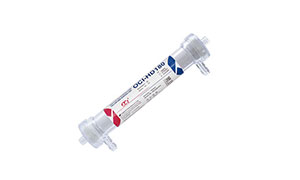
Il dializzatore è costituito da una membrana di dialisi e dalla sua struttura di supporto per sostituire il rene. La membrana di dialisi è la parte principale del dializzatore, che separa il sangue dal dializzato. Durante la dialisi, il sangue e il dializzato fluiscono in direzioni opposte su entrambi i lati della membrana e l'acqua e i soluti vengono scambiati attraverso la membrana semipermeabile. Le prestazioni del dializzatore determinano l'effetto del trattamento di dialisi ed è un importante fattore di riferimento per lo sviluppo di programmi di emodialisi.
The characteristics of the Emodializzatore are composed of two parts: design characteristics and working characteristics. Design features include the configuration of the Dializzatore, the pre-charge of the blood chamber and the dialysate chamber, the type of membrane, and the biocompatibility. Working characteristics include the transfer rate of different solutes and water. There are several classification methods for Dializzatores.
Ⅰ. Classificazione secondo la configurazione del dializzatore
Dialyzers are divided into tube type, flat type, and hollow fiber type. At present, the commonly used Dializzatores are hollow fiber type, and the flat-type and tube-type Dializzatores used in the early days have been basically eliminated.
The Dializzatore a fibra cava is composed of 8000-12000 hollow fibers, the fiber inner diameter is 200-300um, and the wall thickness is 2-30um. The hollow fibers are bundled into bundles and placed in the formed Dializzatore casing, and the casing and the dialyzing membrane are sealed with polyurethane. The blood flows through the hollow fibers, and the dialysate flows in the opposite direction outside the fibers.
Lo è stato. Classificazione secondo il materiale della membrana del dializzatore
Secondo il materiale della membrana, i dializzatori possono essere suddivisi in 4 categorie:
1. Regenerated cellulose membrane Dializzatore, including copper imitation membrane and copper ammonia membrane Dializzatore. There are free hydroxyl groups on the surface of cellulose, which can react with blood components and has poor biocompatibility. After the Cupra treatment, the fiber surface is smoother and the biocompatibility is improved.
2. Acetate cellulose membrane Dializzatore. The cellulose is acetylated before the film is formed, which improves the biocompatibility and performance of the film.
3. Replace the fiber membrane Dializzatore. Blood imitation membrane is an alternative copper imitation membrane because its surface-free hydroxyl groups are covered by tertiary ammonia compounds, which have good biocompatibility.
4. Synthetic fiber membrane Dializzatore. Materials for this Dializzatore include polyacrylonitrile, polymethylmethacrylate, polysulfone, polycarbonate, polyethylene, and polyamide. They have a higher transport coefficient and ultrafiltration coefficient, better biocompatibility, but a higher price.
Ⅲ. Classificazione secondo il coefficiente di ultrafiltrazione del dializzatore
According to the ultrafiltration coefficient, there are two different Tipi di dializzatore:
1. Low ultrafiltration coefficient Dializzatore. Ultrafiltration coefficient <15ml/(mmHg.h㎡), including copper imitation membrane, cuprammonium membrane, blood imitation membrane, and cellulose acetate membrane.
2. High-throughput and high-efficiency Dializzatore. Ultrafiltration coefficient> 15 ml/(mmHg.h㎡), has a very high removal rate for medium molecular weight substances and can remove large molecular weight β2-microglobulin and other macromolecular substances. Typical high-efficiency Emodializzatores include polysulfone membrane series, PAN membrane, PMMA membrane, and cellulose acetate membrane Dializzatore.
Potresti anche essere interessato ai seguenti prodotti:
Se hai domande, possiamo aiutarti!